| Key Largo Fishing Pictures/Species
Here you can view our photo gallery
and learn more about the fish we catch in
Key Largo.
Click here to view our
species | Click here to view our
extended gallery

Key Largo Florida
Fishing Area
Flats Slam/Backcountry
Slam
Here you will find more information
on Flats and Backcountry Slam.
Select a type of fish:
Backcountry
Slam | Flats Slam

“Backcountry
Slam" – Snook/Redfish/Trout
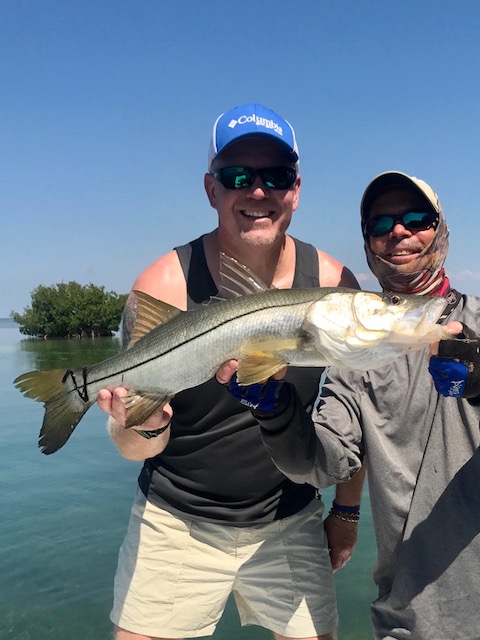
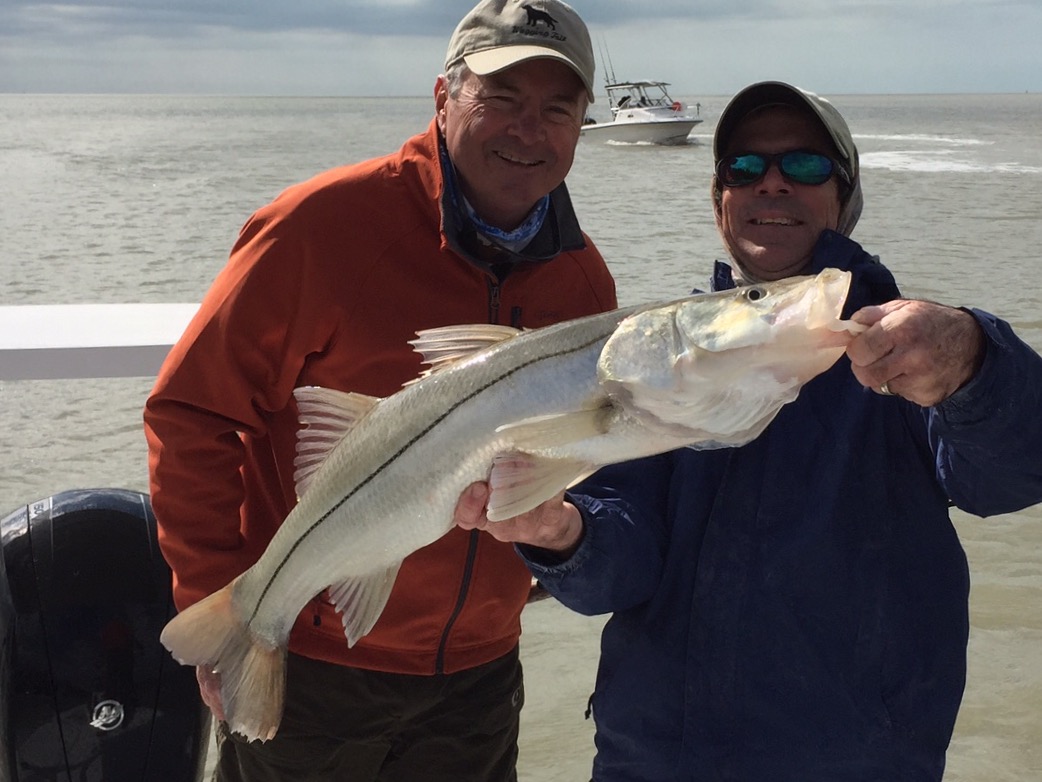
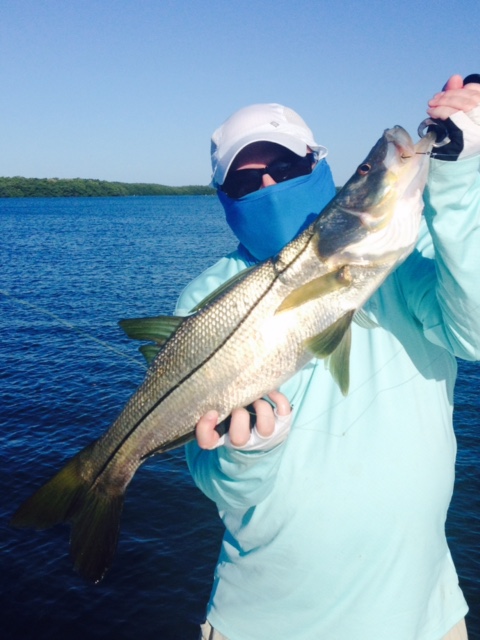
Snook
- Our local backcountry offers
some excellent Snook fishing. The average size is 6 to 8 pounds
and 24-32 inches. You will find them around bridges, sea walls
mangroves, pilings just about any structure. They eat Mullet,
Shrimp, Pilchards, Pinfish and a multitude of artificial lures
or combinations of live and dead bait. These crafty fish are
are tough fighters.
When hooked
they make long hard runs and will jump out of the water all
in an effort to cut you off on something. Watch the sharp
edges on their gill plates when removing hooks. Snook are
prized not only for their fight but also for their fine delicate
taste. The unique combination of year-round warm water, brackish
rivers and backcountry bays, mangroves, forage, and moving
water, makes South Florida one of the leading fisheries for
Snook in the world. One of the greatest sport fish that near
shore angling has to offer.

Redfish
- Redfish love the warm waters of south Florida, the
oyster beds, mangroves, and grassy flats are their regular
haunts. They are prolific, and definitely not timid when it
comes to eating - Which makes them a great sport fish for
light tackle and fly-fishing. Redfish are often seen "tailing"
(very similar to bonefish) on the shallow flats as they feed.
And a well placed cast, which is right on their nose, is rarely
refused. They pull hard and often make several runs, the second
and third sometimes longer than the first.

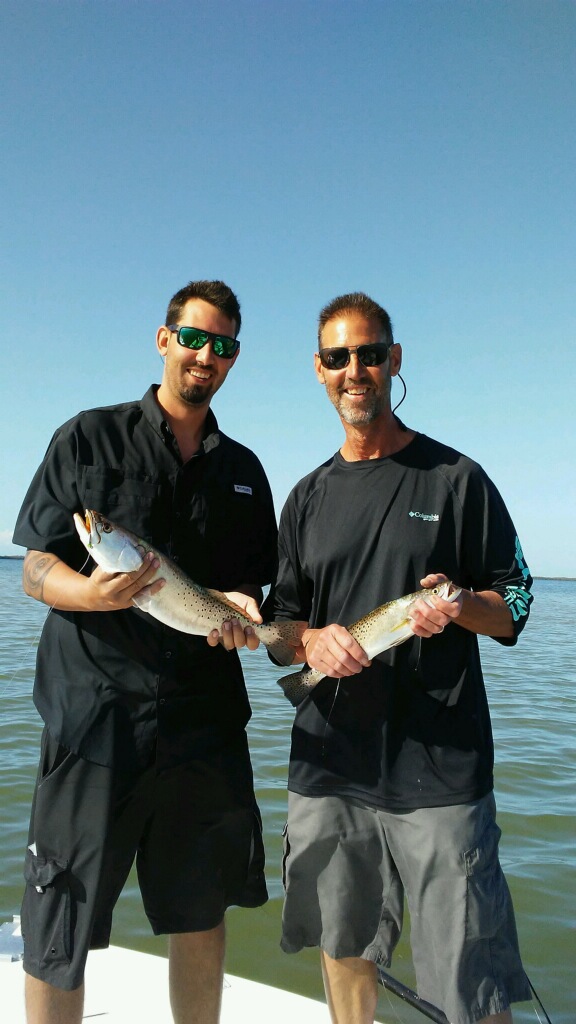
Seatrout
- Seatrout are frequently targeted from December to
April. They are for the novice or expert, bait or fly, lures
work well also. When fishing for them you can use the old
standby a popping cork rig with a shrimp or artificial hanging
below the cork. Remember Pop the cork Sea Trout come to the
gurgling sound the cork makes.
Sea Trout are found over grassy
bottom and in the"muds" that is muddy areas where
the bait is routing in the bottom stirring up shrimp and small
fishes. Trout will also go up on the shallow Flats to feed
and you can sometimes catch them on fly or a favorite top
water plug. Watch those two large front teeth when you take
the hook out.

“Flats Slam"
– Bonefish/Tarpon/Permit
Bonefish
(“Grey Ghost”) -
Known for very fast and very long first runs, this is probably
the species most synonymous with Florida
flats fishing. There is a reason why they are called "gray
ghost of the flats" and are a real light tackle challenge.
Here in the Keys, bonefish generally average in the 6 to 8
pound range with fish of 10 to 12 or larger not uncommon.
They are usually fished in water less than two feet deep,
and sometimes are seen so shallow that their tails and dorsal
fins show as they root out food from the bottom. This is called
"tailing" and is the most demanding of angler skills.
Bonefish prefer water temperatures over 72 degrees, but can
sometimes be found in slightly cooler conditions. They are
here year round and can be caught whenever conditions are
favorable. The best months are probably March through November.

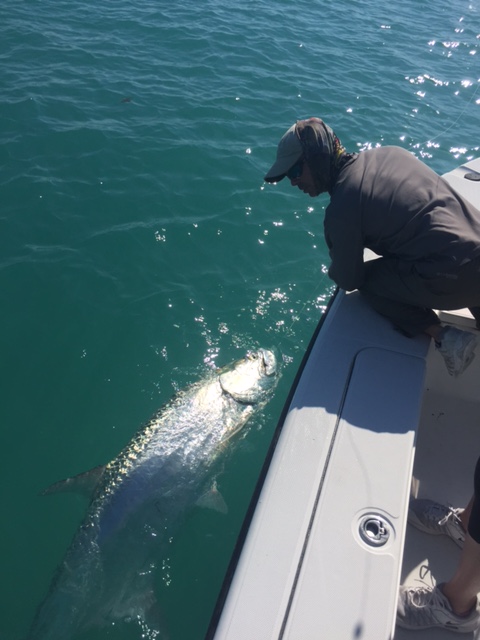
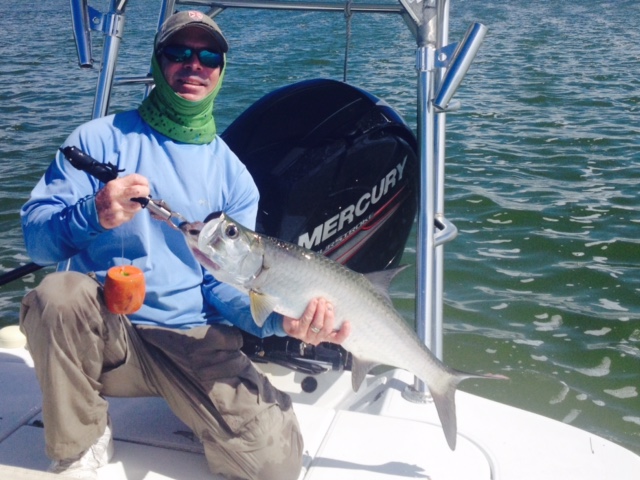
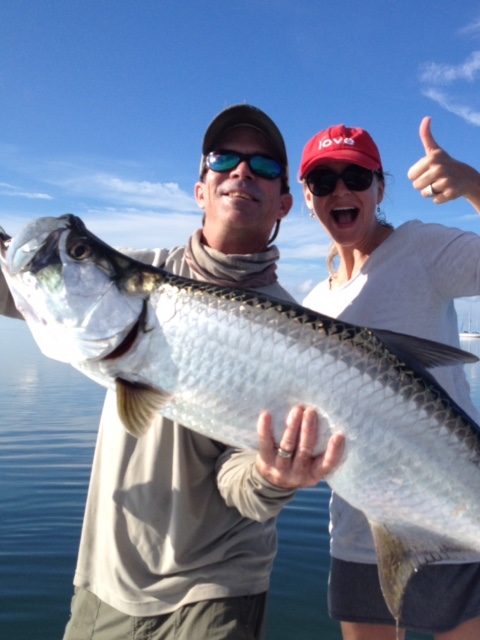
Tarpon
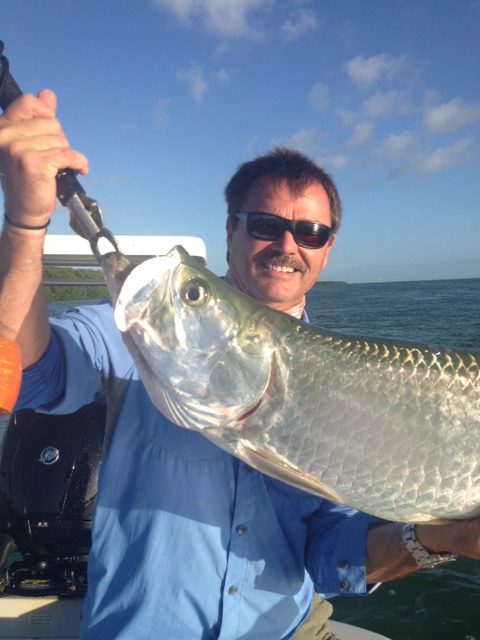
(“Silver King”) -
These incredible fish offer the ultimate in a shallow
water big game fish. During the spring migrations, fish can
average from 80 to over 150 pounds. They can be found rolling
and feeding in deep backcountry finger channels, in shallow
grassy basins or along the edges of bars and flats in 4 to
6 feet of water. Known for explosive strikes and unbelievable
jumps, these "silver kings" are the favorite of
many anglers. Tarpon tend to prefer water temps in the mid
70's for the channels and usually need 78-79 degrees for the
flats. The big fish are here in good to excellent numbers
from March through July and small tarpon 8-20 pounds are here
year-round, disappearing during cold fronts in winter.

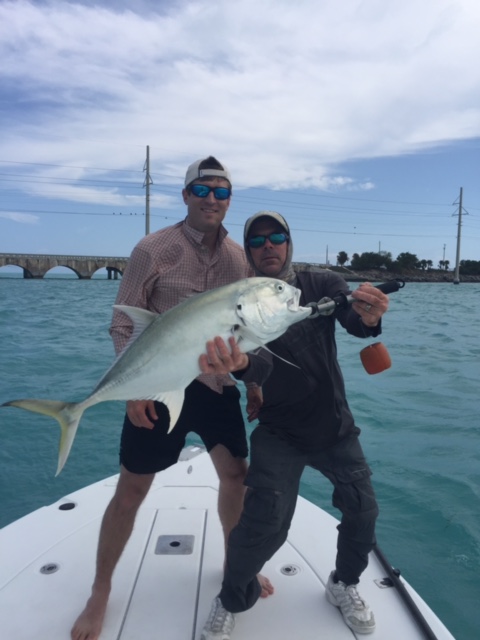
Permit
- The permit is a very strong and hard fighting fish, averaging
8 to 16 pounds. Fish in the 20 to 35 pound range are common
with fish to near 50 pounds showing fairly often. They seem
to tolerate slightly cooler and slightly warmer conditions
than the bones, and are also here all year with February thru
November probably being most productive. Permit are usually
found in waters less than 3 to 4 feet deep and will also float
in channels or off flat edges in calm situations. They can
often be the most challenging species to approach and hook
with a subsequent battle that can last an hour or more.
back
to top |